
The first question almost every buyer asks is the price per piece. Here is the one number we can give without seeing your logo, and an honest account of what changes the price on everything else.
One printed t-shirt online: ₹499
A single printed t-shirt ordered online is ₹499, including GST and delivery. That is a 240 GSM combed cotton t-shirt in a stock colour, printed in one position. It is a real order, not a sample price, and it is the simplest way to see the cloth and the print quality before you order more.
Anything beyond that, a different garment, a second print position, embroidery, a larger run or your own brand colour, is priced per piece on a quote. The rest of this guide explains what goes into that quote, so you know what to ask for and where the money goes.
What moves the price per piece
1. The garment and the fabric
The blank garment is the biggest single part of the price. A heavier cloth costs more than a lighter one, a polo costs more than a round-neck tee because it uses more cloth and has a collar and placket, and a hoodie costs more again. Our standard tee is 240 GSM combed cotton. If you want to understand the weights, read what GSM means.
2. Quantity
Some costs are fixed for the whole order: preparing the artwork, setting up the method, checking the first piece. On a small order a few pieces carry all of that. On a larger order it is spread across every piece, so the price per piece falls as the quantity rises. How much it falls depends mostly on the method.
3. Number of print positions
Each position is a separate operation: front, back, left chest, sleeve, back neck. A logo on the left chest and a large print on the back is two positions, and each one adds to the price. If budget is tight, one well-placed logo usually does more than three small ones.
4. The method
The method changes how the price is built, not only how much it is.
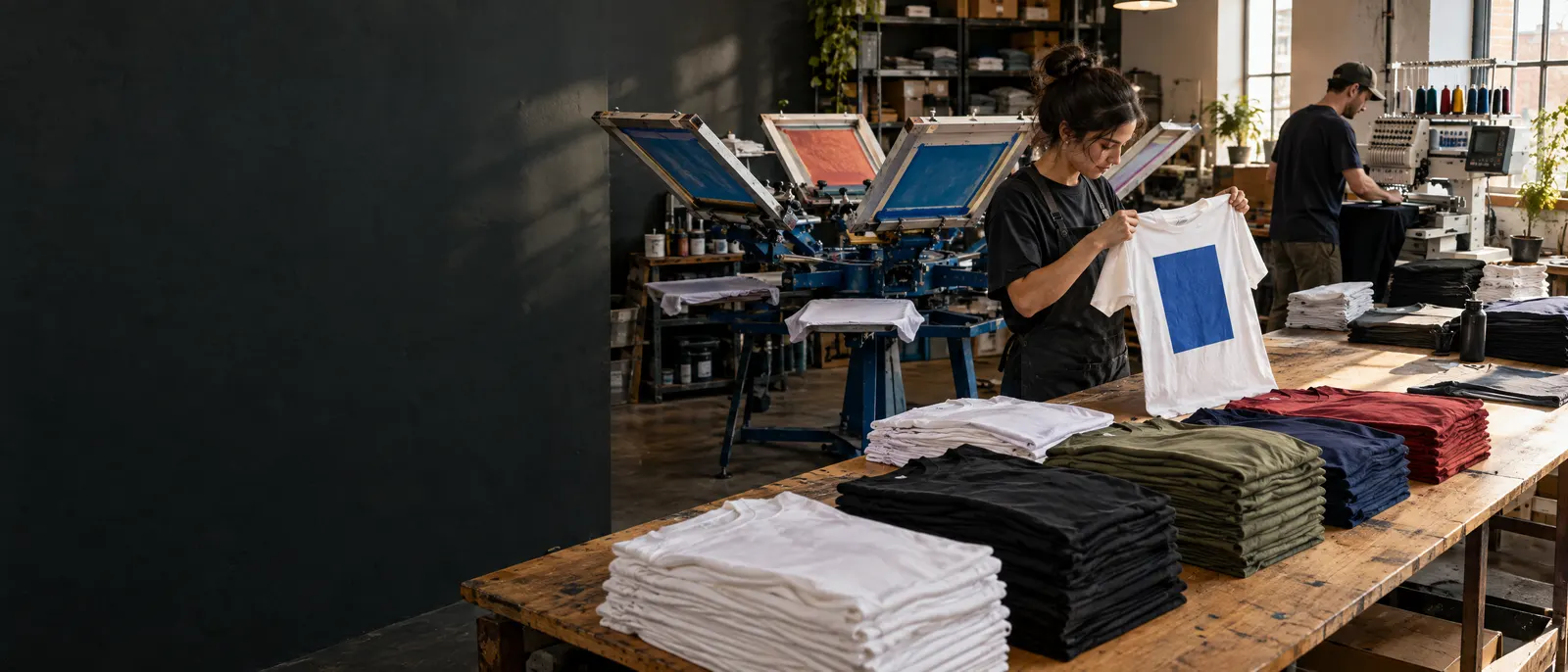
- Screen printing uses one screen for each colour in the design. Each screen takes time to make, so the price counts colours, and screen printing suits bigger runs where that setup is shared across many pieces. A one-colour logo on a large run is where it is at its best. See screen printing.
- DTF prints the full-colour design onto a film that is then pressed onto the garment. There are no screens, so colour count barely matters and small runs stay viable. See DTF printing.
- DTG prints ink straight into the cotton, like an inkjet on cloth. It suits full colour, photographs and small runs on cotton tees. See DTG printing.
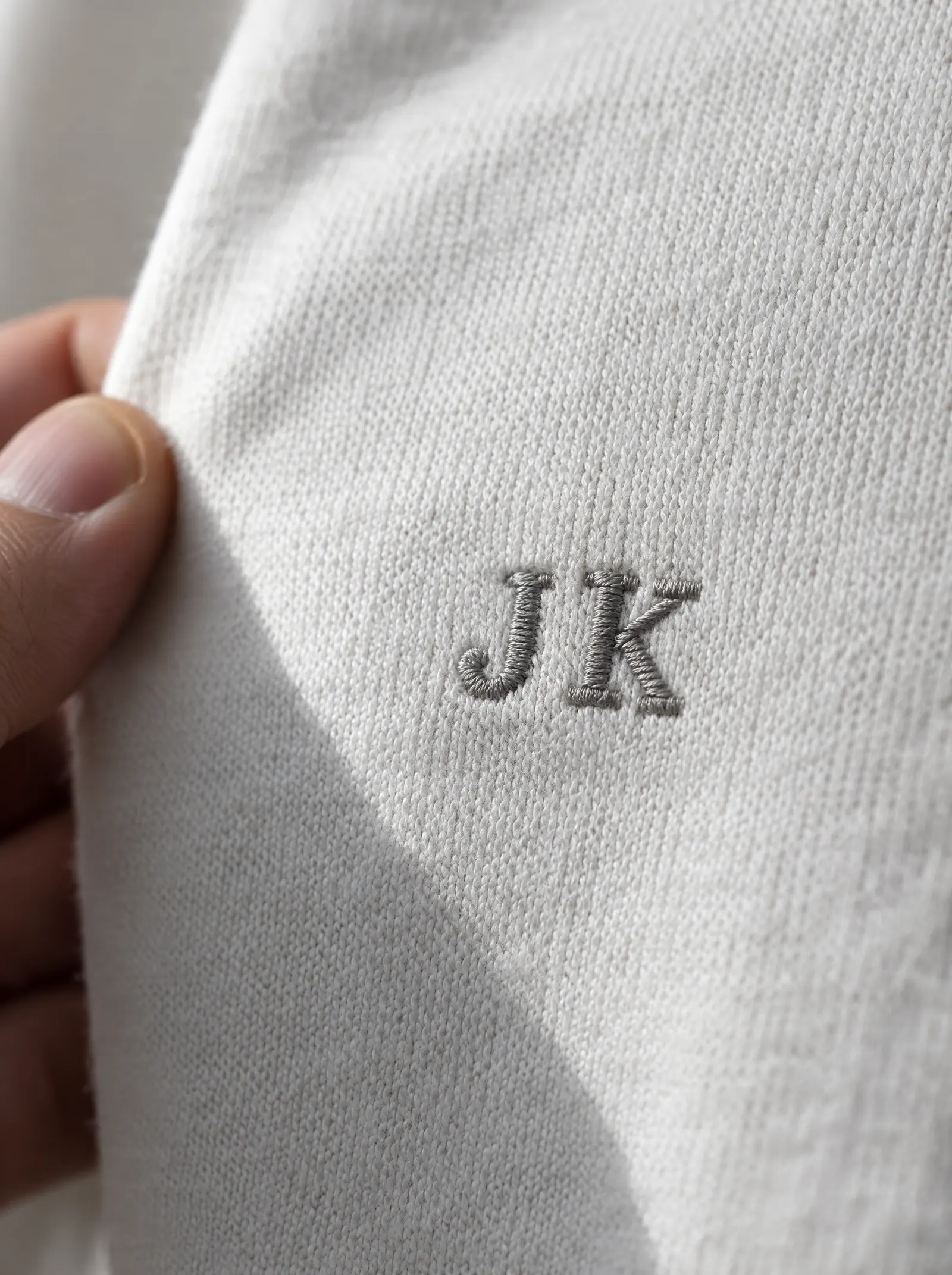
- Embroidery is priced by the size and the detail of the logo: how many stitches it takes, not how many colours it has. A small left chest logo costs far less than a large back piece. See custom embroidery.
If you are unsure which suits your artwork, read screen printing or DTF and embroidery or print. We recommend a method with every quote and say why.
5. Colour of the garment
- Core colours are kept in cloth, already dyed, and work from one piece.
- Extended colours from our wider shade card, and your exact Pantone, are dyed to order. Dyeing happens a roll at a time, so the minimum is about one roll of cloth: roughly 50 polos or 75 tees.
A brand colour on the body therefore changes both the quantity you need and the price per piece. Using the colour in the logo or the details, with the body in a core colour, avoids both. The full reasoning is in core, extended and Pantone colours.
6. Your artwork
A clean vector logo goes straight into production. A small logo copied from a website may need redrawing before it prints well, and an embroidered logo is digitised into stitch paths first. We tell you before anything is made if your file needs work. How to prepare your logo explains what to send.
Why we do not publish a price table
A table that ignores these six things would be wrong for most orders. Two quotes for "100 printed t-shirts" can differ a great deal once one is a one-colour chest logo on a core colour tee and the other is a full-colour front and back print on a Pantone-dyed polo. We would rather give you the right number for your order than a low number that changes later.
How to get an accurate quote
Send us, in one message:
- The garment and the colour you want.
- The quantity, with a rough size split if you have it.
- Your logo, as a vector file if you have one.
- Where it goes: front, back, left chest, sleeve.
- The date you need it by.
With those, the quote is per piece, includes GST, and comes with a mockup. Prices are for our own work: everything is cut, sewn, printed and embroidered in our own factory in India.
Send us your logo for a quote, or start with a single printed tee to see the quality for yourself. For larger runs, see bulk t-shirt printing.
Quick answers
How much does it cost to print one custom t-shirt in India?
A single printed t-shirt ordered online is ₹499, including GST and delivery. That is a 240 GSM combed cotton t-shirt in a stock colour, printed in one position. It is a real order, not a sample price.
Does the price per t-shirt go down on a bigger order?
Yes. Some costs are fixed for the whole order, such as preparing the artwork, setting up the method and checking the first piece. On a larger order they are spread across every piece, so the price per piece falls; how much depends mostly on the method.
What do I need to send to get a t-shirt printing quote?
The garment and colour, the quantity with a rough size split, your logo as a vector file if you have one, where it goes, and the date you need it by. The quote is then per piece, includes GST, and comes with a mockup.