
A good jersey is recognisable from the far end of the ground and still looks right in a close-up photograph. Those two distances set most of the rules. Here is how to work through a design, in the order the decisions should be made.
1. Start with the colours
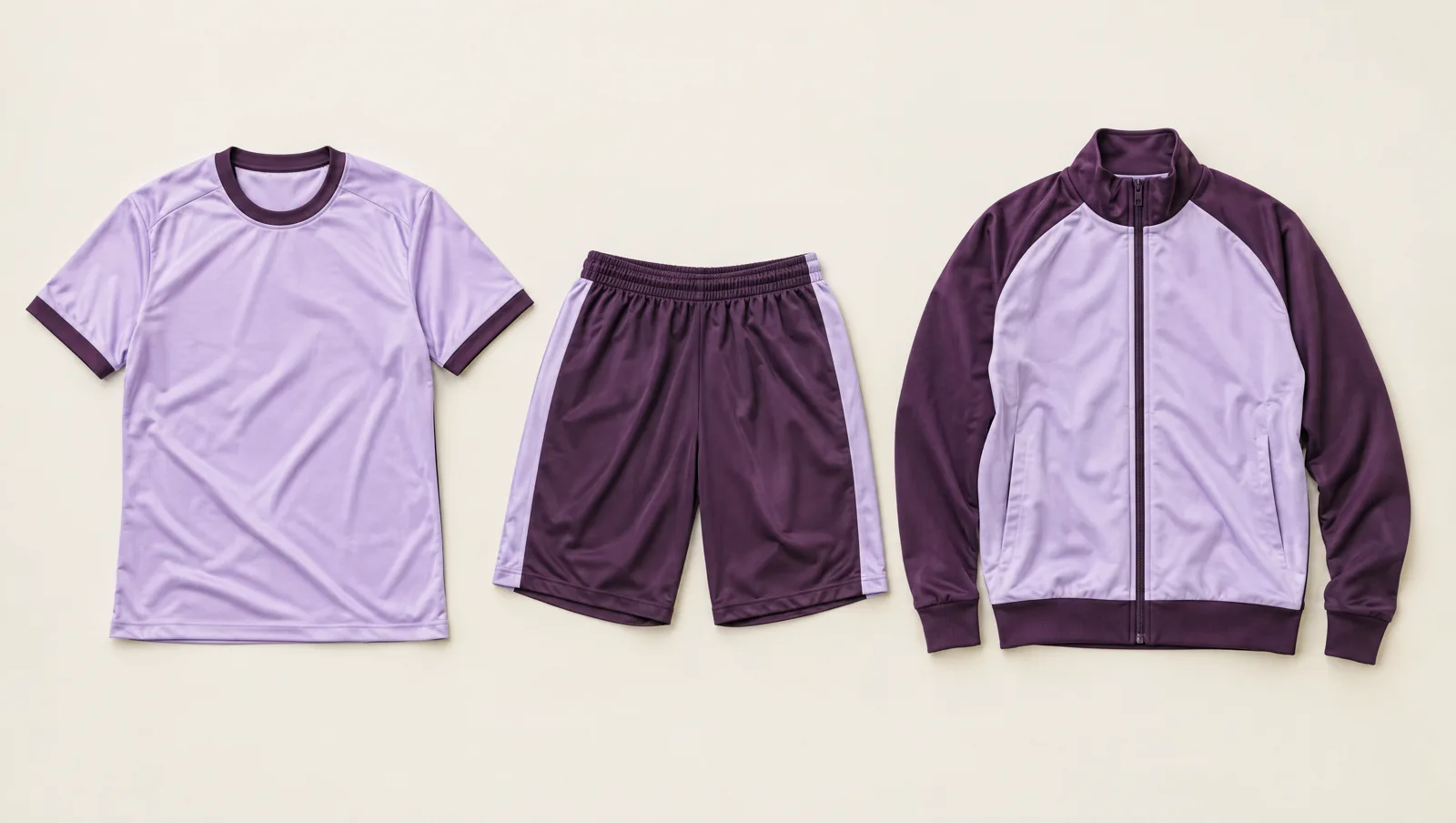
Pick two colours, three at most. One is the main body colour. One is the accent for trims, a band or the sleeves. A third, if you need it, is for the names and numbers.
- Contrast matters more than shade. Navy and gold read from a distance. Navy and dark green blur into one.
- Check the opposition. If the teams you play most often wear red, a red jersey means borrowing bibs every other week.
- Think about heat. Dark colours absorb more sun. For afternoon cricket in summer, a lighter body with a dark accent is more comfortable than the other way round.
- Use the colours you already have. If the club, college or company has colours, start there. People recognise colours before they recognise crests.
With sublimation, colour costs nothing extra, so the limit is what looks right, not what the printer can do.
2. Place the crest
The crest normally sits on the left chest, over the heart. A sponsor or the kit name usually takes the right chest, or the centre for a main sponsor.
- Send a vector file if you have one: an AI, EPS, PDF or SVG. A sharp PNG works too. A crest copied from a WhatsApp image rarely does. See preparing your logo.
- Keep it a sensible size. A crest roughly the width of a palm is the usual size on the chest. Bigger is not better.
- Simplify fine detail. Thin lines and small text inside a crest disappear at that size. If the crest has a motto in tiny letters, consider leaving it off the jersey.
3. Choose a pattern, or no pattern
Sublimation can print anything, which is exactly why restraint helps. Some directions that work:
- A diagonal band from shoulder to hip.
- A gradient from one colour to another.
- A contrasting shoulder yoke or sleeves.
- A faint texture, such as a city skyline or an enlarged crest, in a tone close to the body colour.
- A plain body with contrasting collar and cuffs.
One rule matters more than the pattern itself: keep the area behind the number calm. A pattern running under a number makes it unreadable. For more, see cricket jersey design ideas.
4. Pick the collar and sleeves
- Round neck: light, simple and common in football, T20 and box cricket.
- V-neck: a little more air at the neck; a common football choice.
- Polo collar: traditional, smart, the classic club cricket look.
- Half or full sleeve: full sleeves protect the arms in the sun; half sleeves are cooler. See full sleeve or half sleeve.
5. Set the names and numbers
This is the part that has to work from the stands, so it deserves the most care.
- Use a bold, simple typeface. Block lettering with thick strokes reads at a distance. Script and thin fonts do not.
- Make the number big. The back number is usually the largest element on the jersey. A small front number on the chest or shorts is common in football.
- Use strong contrast. Light on dark or dark on light. If the background varies, add an outline in a contrasting colour.
- Agree how names are printed. Surname only, first name, or a nickname, in capitals or not. Decide once for the whole team so the set looks consistent.
- Check the longest name. A long surname has to fit across the shoulders without shrinking below the others. Look at it on the mockup.
See where names, numbers and sponsors go for standard positions by sport.
6. Leave room for sponsors
If a sponsor pays for the set, ask where they expect their logo before you design. A main sponsor usually takes the centre chest; smaller sponsors go on a sleeve or below the back number. Design around their colours where you can, rather than fighting them.
7. Test it at two distances
Before you approve anything:
- Far: shrink the mockup to the size of a thumbnail on your phone. Can you still tell which team it is, and read the number?
- Near: zoom right in on the crest and the name. Are the edges clean and the spellings right?
If it passes both, it will work on the ground and in the team photo.
Tools for getting started
You do not need a designer to begin. Try colours and patterns in our jersey maker, or send a sketch, a reference photo or just your colours and crest. A mockup of the design comes back, mockup changes are free, and nothing is made until you approve it. You approve every player's name on the mockup too.
Our jerseys are sublimated in our own factory in India, in any colours, from one jersey: ₹599 half sleeve and ₹699 full sleeve. See custom jerseys, or send the crest and the roster.
Quick answers
How many colours should a sports jersey have?
Two or three. One main colour, one accent, and one for names and numbers if needed. More than that turns to noise from a distance, even though sublimation can print any number.
Where does the crest go on a jersey?
On the left chest, over the heart, at roughly the width of a palm. A sponsor or kit name usually takes the right chest or the centre.
What font is best for jersey names and numbers?
A bold block typeface with thick strokes. It reads from the stands. Thin, script or decorative fonts look good on a screen and disappear at a distance.
Can I design a jersey myself without a designer?
Yes. Start in an online jersey maker, or send a sketch, a reference photo, or just your colours and crest, and ask for a mockup to react to.