
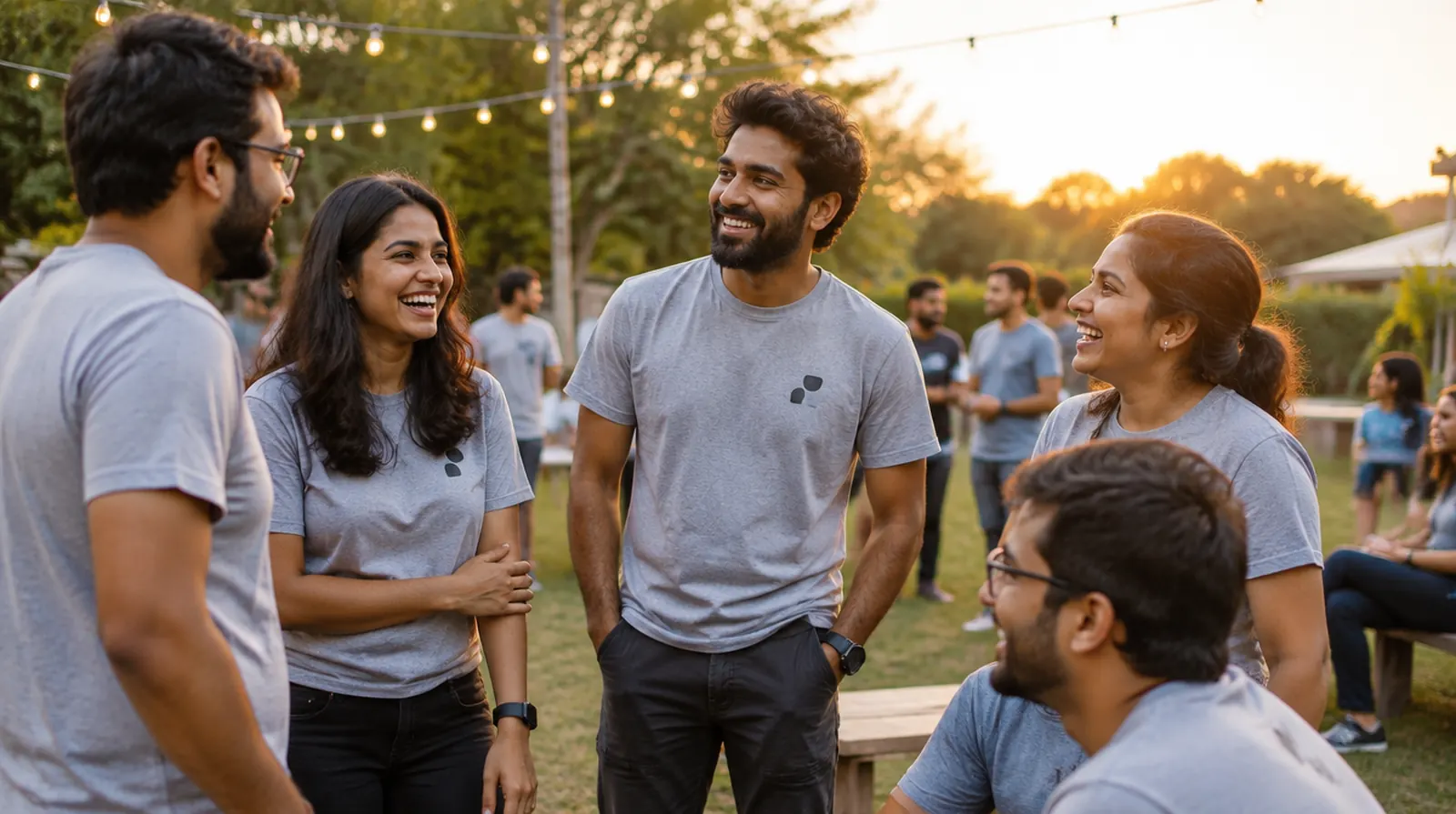
Event t-shirts have one rule that office merch does not: the date does not move. A fest, a run, a conference or a launch happens on the day whether the shirts have arrived or not. Plan backwards from that date, and most problems disappear.
Step 1: Work backwards from the date
Write down the event date, then count back.
- Dispatch is 4 to 30 days from mockup approval, depending on the order: the garment, the method, the colour and the quantity.
- Add delivery time to your city, and a few spare days for distribution.
- Add time for approvals. Committees, sponsors and faculty all want to see the design. Each round takes days, not hours.
- Add time for collecting sizes and names, which always takes longer than planned.
The result is the date you need to approve the mockup by. Put it in the calendar and tell everyone. Tell us the event date at the start.
Step 2: Decide who gets a shirt
Event shirts often go to more than one group, and each may need something different:
- Organisers and core team: often a different colour or a polo, so they can be found.
- Volunteers: a bright colour that stands out in a crowd.
- Participants: the main design, in the largest numbers.
- Sponsors and guests: sometimes a small number of a premium piece.
Agree the groups first, then the numbers for each.
Step 3: Collect sizes properly
The most common event shirt complaint is the wrong size. Ask every person for their size rather than ordering a spread of mediums and larges.
- Our standard tee comes in nine sizes, XS to 5XL, so nobody is left out.
- Share a size chart and ask people to measure a t-shirt they already own. See the t-shirt size guide.
- Use one form with name, size and group in it, and close it on a fixed date.
- Order a few spares in the most common sizes for late entries.
Step 4: Names, numbers and personalisation
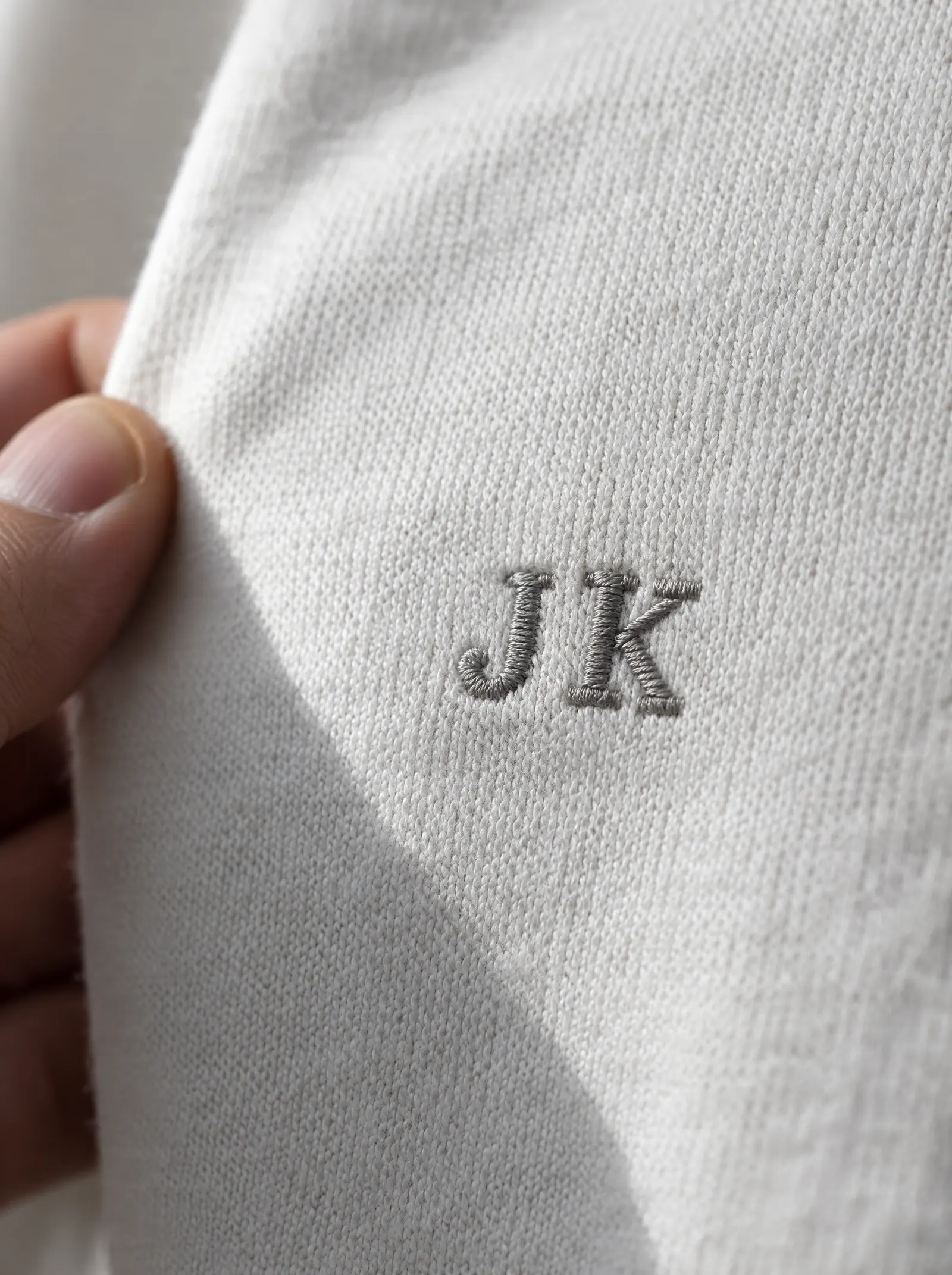
Fests and sports events often want each person's name or a number on the back. Plan for it early:
- Collect names in the same form as sizes, spelt exactly as they should be printed.
- Check every name. One misspelling on a shirt is one unhappy person.
- Personalisation suits methods without screens, such as DTF and DTG, because every shirt can be different.
Step 5: Design for the event
An event shirt has a short job and a long one. On the day it identifies people. Afterwards it is a souvenir, and a good one gets worn for years.
- Front: the fest or event logo, or a strong graphic.
- Back: the event name, year, a list of sponsors, or names.
- Sleeve: the college crest or a small sponsor logo.
- Keep text large for reading across a ground. See choosing a font for t-shirts.
- Check every date and spelling before you approve.
For many sponsors on one back, give each logo enough space, and use one colour for all of them if the design gets busy.
Step 6: Choose garment, colour and method
- Garment: a cotton tee for most events. For a run or a sports meet in heat, a polyester performance tee or jersey; see custom jerseys. For winter fests and leavers, hoodies; see college hoodies.
- Colour: stock (core) colours start from one piece. A garment dyed in an extended colour or your exact Pantone needs one roll of cloth. See core, extended and Pantone colours.
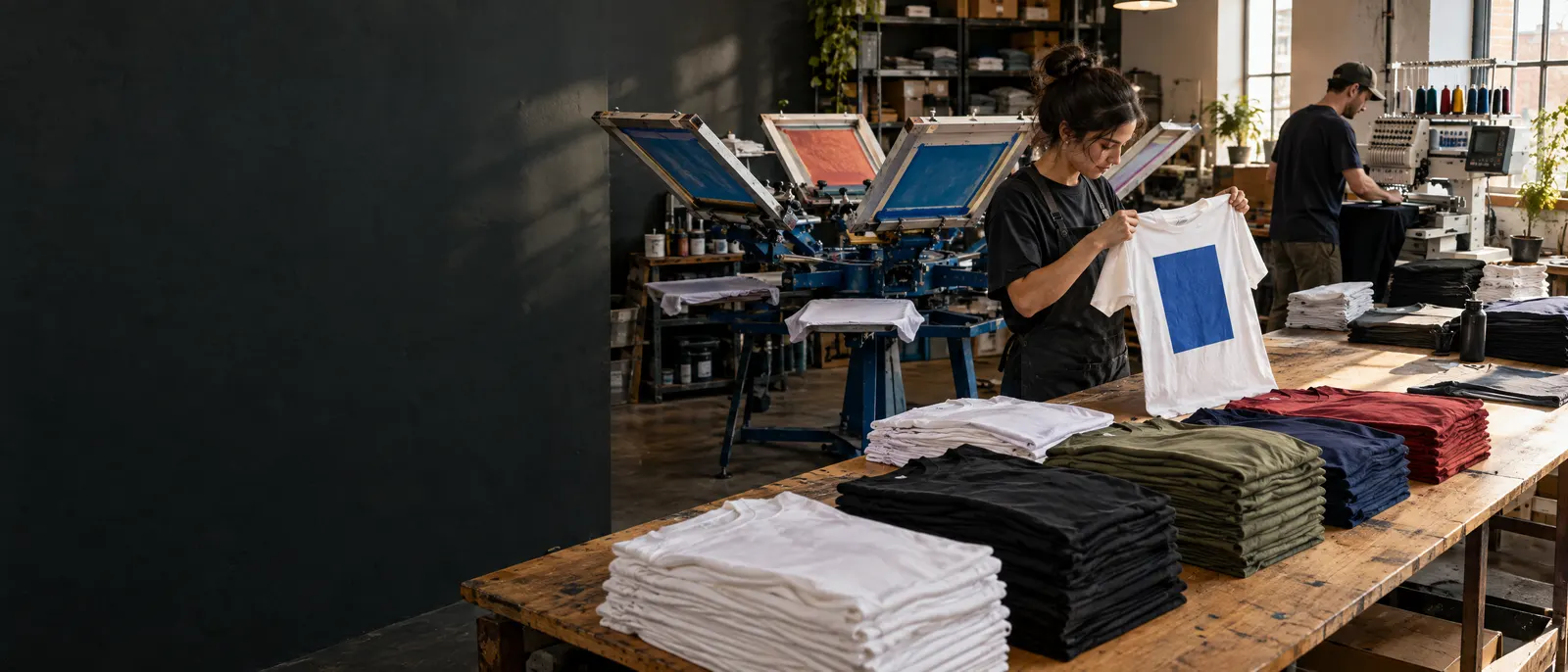
- Method: screen printing for one or two colours on a large run, DTF or DTG for full colour or individual names. We do all five methods in-house.
Step 7: Set a budget per piece
Budget per piece, not per order. It keeps the numbers clear when the headcount changes. What moves the price per piece:
- The garment: a hoodie costs more than a polo, a polo more than a tee.
- The quantity: the price per piece falls as the quantity rises.
- Print positions: each position is a separate job. Front and back cost more than front only.
- The method and colours: screen printing counts colours; DTF and DTG do not.
- Personalisation: individual names add work to every piece.
For reference, a single printed tee ordered online is ₹499 including GST and delivery: 240 GSM combed cotton, stock colour, one print position. A fest order is priced per piece on a quote. If sponsors are paying, ask for a GST invoice: one comes with every order.
Step 8: Approve the mockup
You get a mockup before anything is made: the design on the garment, in position, at size. Changes to the mockup are free. Share it with everyone who must sign off, collect their comments in one round if you can, and approve. Nothing goes into production until you do. If what arrives is not what you approved, we reprint it free.
Step 9: Distribution
Plan how shirts reach people on the day. Pack by group and size, label the boxes, and have one person own the list. Shirts handed out at a crowded desk on the morning of the event go wrong; shirts handed out the day before go smoothly.
A short event checklist
- Event date, and the mockup approval date worked back from it.
- Groups and numbers agreed.
- One form for names, sizes and groups, closed on time.
- Design checked for every spelling and date.
- Garment, colour and method chosen.
- Budget per piece agreed.
For larger runs, see bulk t-shirt printing. Ready to start? Send us your event details and we will come back with a mockup and a quote.
Quick answers
How early should I order t-shirts for a college fest?
Work backwards from the event date. Dispatch is 4 to 30 days from mockup approval, depending on the order. Add delivery, distribution, and time for committee approvals and size collection, which always take longer than planned.
How do I collect t-shirt sizes for a large group?
Use one form with name, size and group, ask each person to measure a t-shirt they own against a size chart, and close it on a fixed date. Our standard tee comes in nine sizes, XS to 5XL. Order a few spares in the common sizes.
Can each event t-shirt have a different name printed on it?
Yes. Personalisation suits methods without screens, such as DTF and DTG, because every shirt can be different. Collect names in the same form as sizes, spelt exactly as they should appear, and check each one on the mockup.
How much do college fest t-shirts cost per piece?
A single printed tee online is ₹499 including GST and delivery. A fest order is priced per piece on a quote, depending on the garment, quantity, print positions, method and any personalisation.