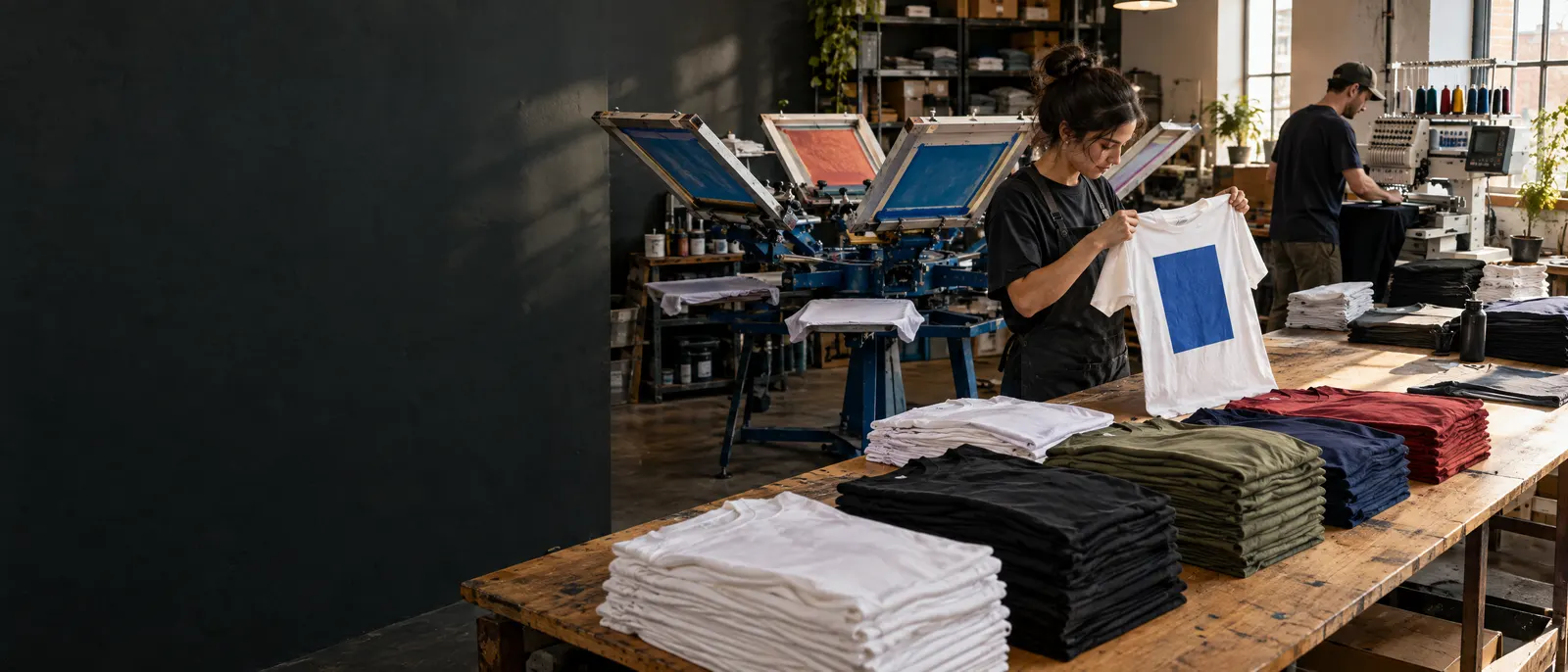

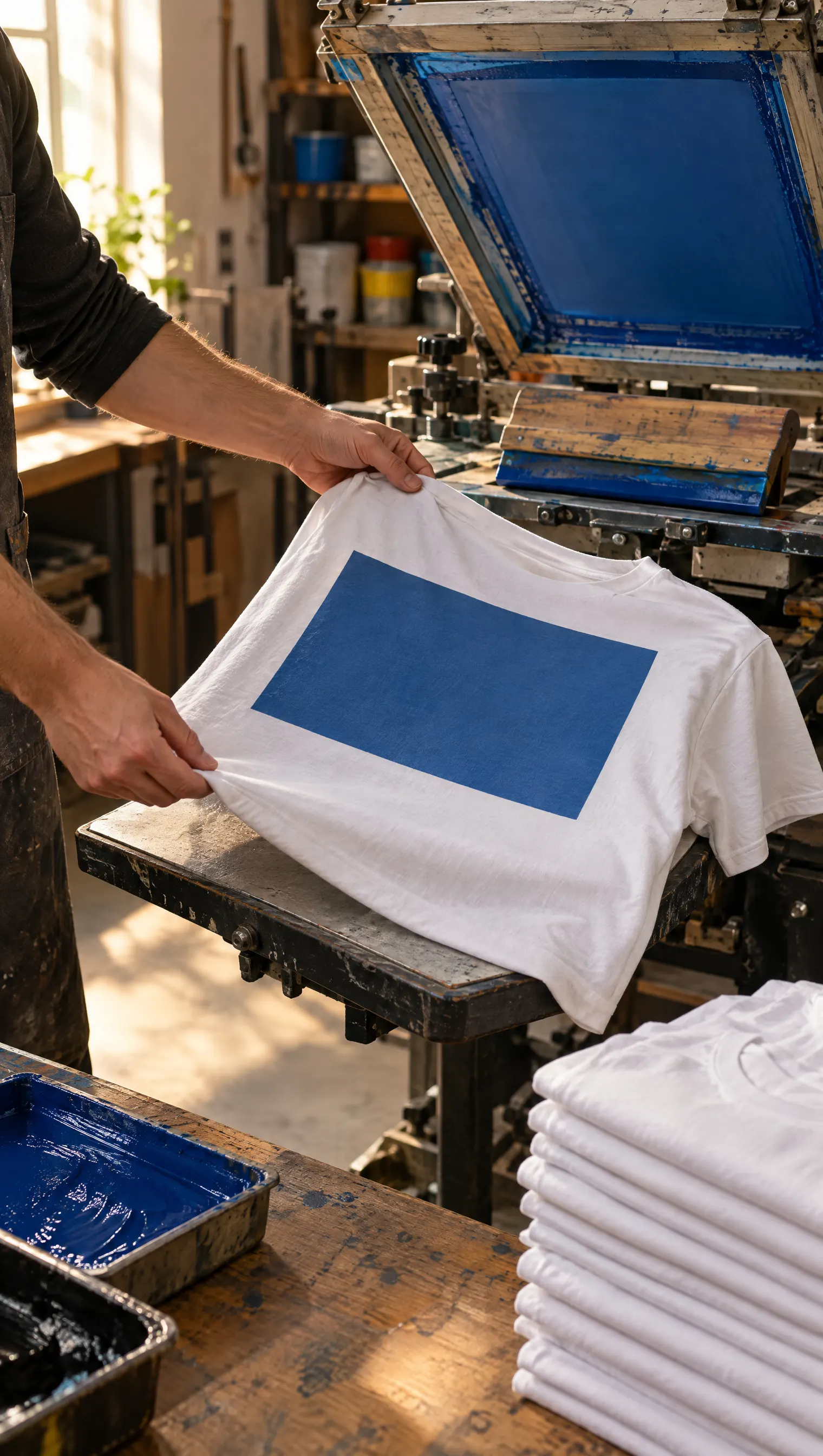
Placement decides whether a team t-shirt gets worn on a Saturday or only on the day it was handed out. Here is what each position does.
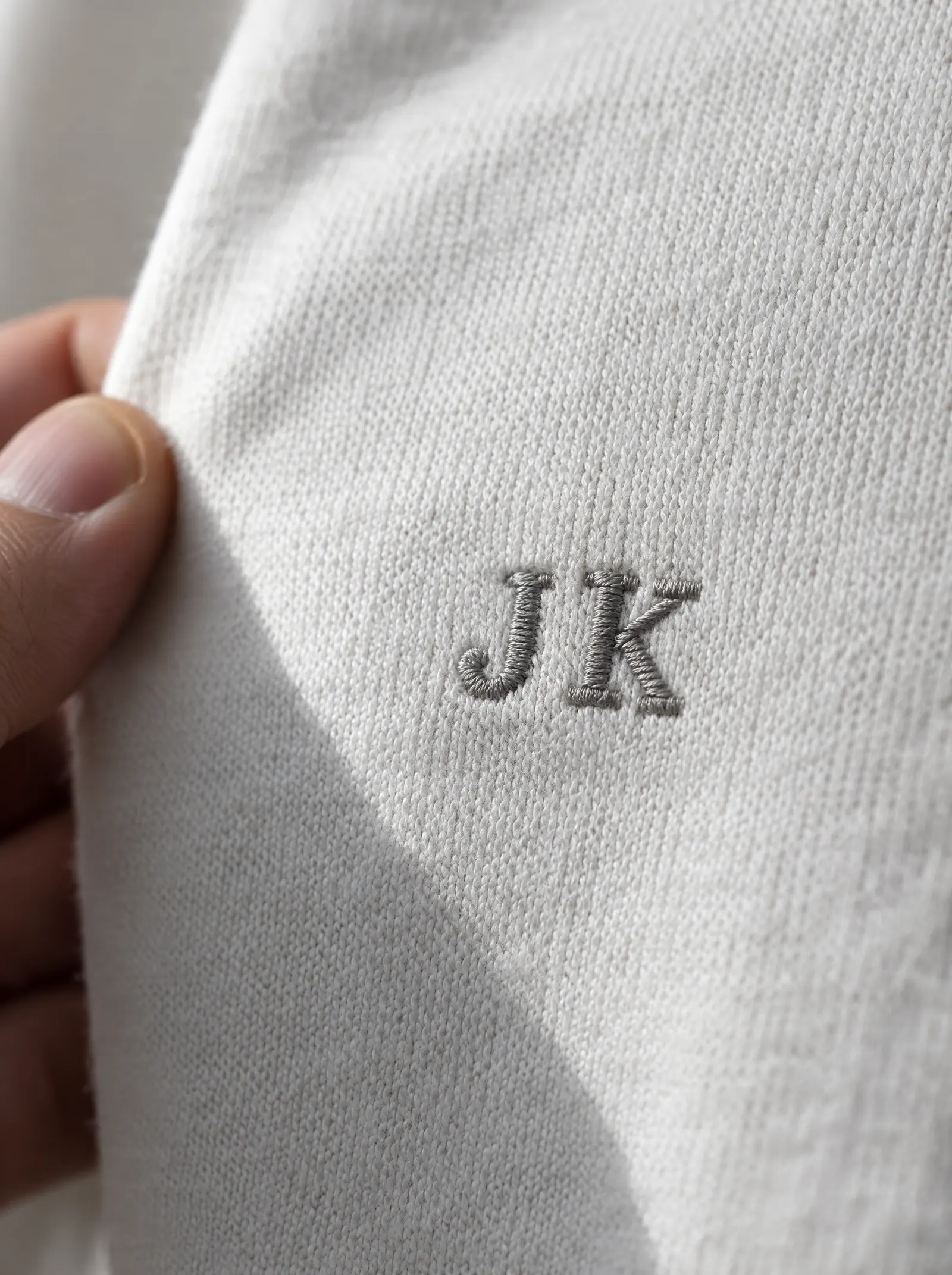
Left chest
The quiet, professional choice: a logo about the width of a palm, over the heart. It is the placement for company t-shirts and polos people wear to work and keep wearing after. If you are unsure, start here.
Centre front
A larger logo or a design across the chest, usually 20 to 28 cm wide. It is louder, and right for events, launches, fests and merch people choose to buy. Keep it high on the chest; a print that sits on the stomach looks wrong on almost everyone.
Full back
The biggest canvas on a t-shirt, for a slogan, an event name, a list of sponsors or a team name and number. Pair it with a small left chest logo on the front and the shirt reads well from both sides.
Sleeve
A small mark on the upper sleeve, often the second logo: a sponsor, a hashtag, the year. It adds detail without adding noise.
Back neck
A tiny logo or a website below the collar. Subtle, and it shows when the wearer turns away.
How to choose
- Worn to work: left chest only, or left chest and a small back neck.
- An event: centre front or full back, plus the event name and date.
- Merch you sell: treat it like clothing first. A small, well-made mark sells better than a giant logo.
- A team: name and number on the back, crest on the left chest.
Each extra position is a separate print and adds to the price, so one well-placed logo usually does more than three small ones. See what custom t-shirt printing costs.
Every placement is shown on the mockup before anything is printed, and changes to the mockup are free. Start on custom t-shirt printing, or try placements yourself in the t-shirt design maker.