
This guide explains, in plain terms, what happens between your Pantone code and a finished garment, and what you can do to make sure the colour comes out the way you expect. It belongs with our guide to choosing t-shirt fabric.
What does a Pantone code mean on fabric?
Pantone publishes colour references for different materials. The codes most brands have are for print on paper, ending in C (coated paper) or U (uncoated). Textiles have their own reference books; the cotton one uses codes ending in TCX.
The difference matters. A C code describes ink on smooth paper. Dye in cotton behaves differently: it sits inside the fibre, and the knit's texture scatters light. Most C codes can be matched closely on cloth, but very bright, fluorescent or metallic shades cannot be reproduced exactly in a cotton dye.
So send the best reference you have:
- A textile (TCX) code, if your brand guide has one.
- Otherwise your C code, plus a physical sample of the colour if you have one: a printed brochure, a sign, an existing garment.
- Never a hex code or a screenshot. Screens show colour differently, and there is nothing physical to match.
How is knitted fabric dyed?
Most cotton for t-shirts, polos and hoodies is knitted first, in its natural off-white state, and dyed afterwards. In outline:
1. Preparing the cloth. The knitted fabric is scoured and bleached so it takes dye evenly. 2. Dyeing. The cloth goes into a dyeing machine with water, dye and chemicals, and is circulated at temperature until the colour is fixed. Cotton is dyed with reactive dyes, which bond with the fibre; polyester needs disperse dyes at higher temperature. 3. Washing off. Loose dye is washed out, so the colour does not run later. 4. Finishing. The cloth is dried, softened and compacted. Our fabrics are bio-washed with colourfast dyes and washed for shrinkage arrest, so the garment keeps its size after the first wash.
How is the shade matched?
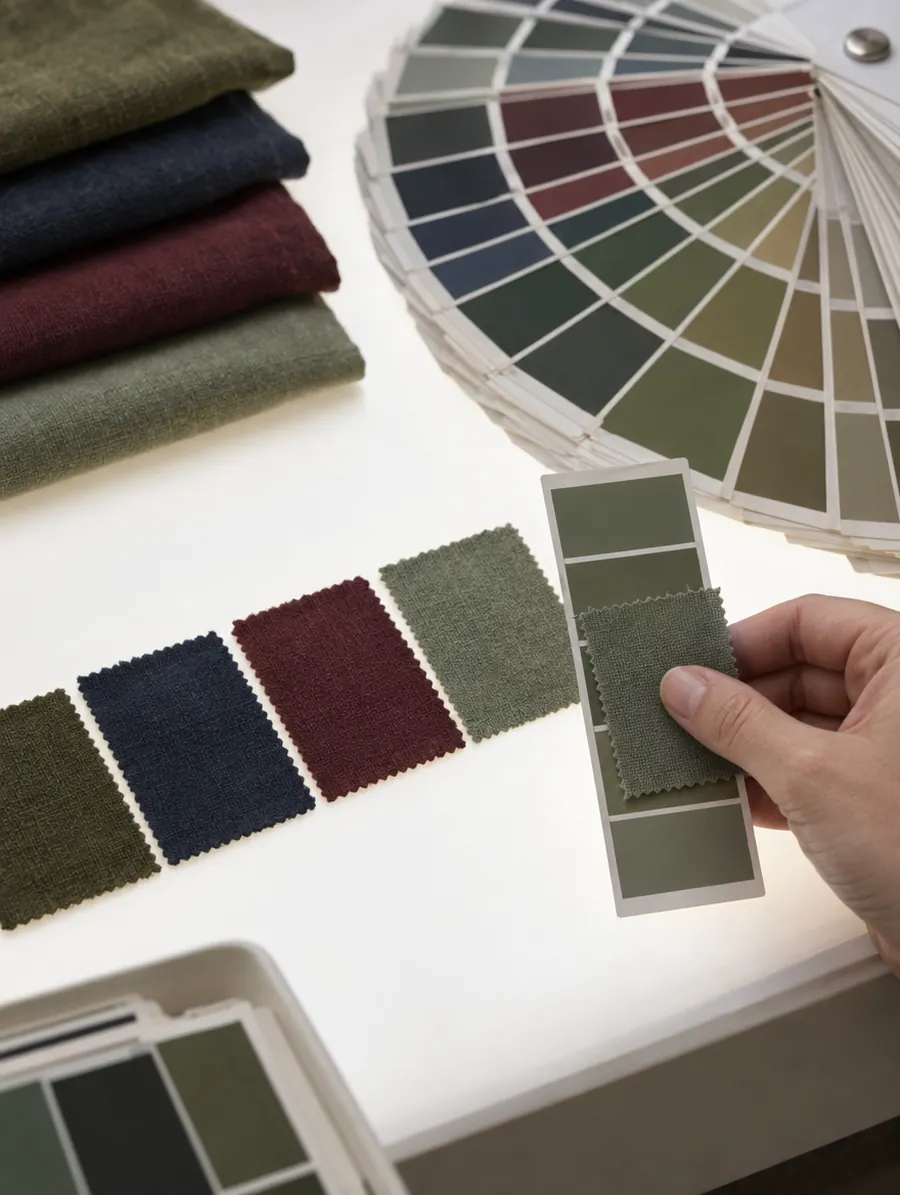
Before a full machine load is dyed, the dyer works out a recipe on a small swatch. In the trade this is called a lab dip. It is compared with your reference in a light box under standard daylight, adjusted, and dyed again until it matches. Many dye houses also measure the swatch with a spectrophotometer, which puts a number on how far it is from the target.
When you approve a shade, ask to see it on cloth, in daylight, next to your physical reference. A swatch photographed on a phone can look right and still be wrong.
Why is there a minimum?
A dyeing machine is loaded with a set weight of cloth. Dyeing a few metres costs nearly as much water, energy, chemicals and machine time as dyeing a full load, and the colour of a part-load is harder to control. So the dye lot is sized to the machine, and the minimum is what that cloth makes in your garment.
That is why the number differs by garment. A heavy polo uses more cloth than a t-shirt, so the same load makes fewer of them. With Fleeke:
| Colour route | Minimum | Dispatch from mockup approval |
|---|---|---|
| Core colour, kept in cloth | One piece | From 4 days |
| Extended colour, dyed to order | 75 pieces | 12 days |
| Your Pantone, matched and dyed | 300 pieces | 30 days |
Your quote states the exact minimum for the garment you choose. Our guide to why colour minimums differ goes through the core and extended ranges.
Why does a Pantone order take 30 days?
Because the cloth does not exist yet. A core colour order is cut from fabric that is already dyed and waiting. A Pantone order has to be matched, dyed, washed, dried and finished before cutting starts, and only then is it sewn, decorated and checked like any other order. The 30 days covers all of it, and the date is confirmed in writing on the mockup.
What can go wrong, and how to avoid it?
- The colour changes with the light. Two colours that match in daylight can drift apart under shop lighting. This is called metamerism. Approve the shade in daylight, and if the garment will mostly be seen indoors, look at it there too.
- One batch differs from the next. Dyeing is chemistry, and two lots of the same recipe can differ slightly. Order everything that must match side by side from one lot, and order spares with it.
- Different fabrics differ. Pique, jersey and fleece take the same dye differently, so a polo and a hoodie in the same Pantone are each matched on their own fabric. Expect them to be close, not identical. The GSM guide explains why fabric weight changes how a garment looks and wears.
- Very dark and very bright shades. A deep black or navy needs a lot of dye and good washing-off to stay fast; a neon cannot be reached in cotton dye at all.
Is a Pantone body worth it?
If your colour is your brand and you need more than 300 pieces, yes: a body in your own shade does more for recognition than any logo. If your order is smaller, the colour can go in the details instead, as our guide to matching uniforms to brand colours shows.
When you are ready, send your reference with your logo through our custom t-shirt printing page, and we will confirm the minimum and the date for your garment.
Quick answers
What is a lab dip?
A small swatch of fabric dyed to test a colour recipe before a full batch is dyed. It is compared with the reference under standard daylight and adjusted until it matches. It is the usual way a shade is approved in the textile trade.
Why is the minimum order higher for a Pantone colour?
Because fabric is dyed a machine load at a time, and a part-load costs almost as much as a full one. The minimum is what one dye lot makes in your garment. With Fleeke a Pantone colour starts at 300 pieces, set per garment.
How long does a Pantone-dyed order take?
30 days from approving the mockup to dispatch. The cloth has to be matched, dyed and finished before cutting starts, then it is made and decorated like any other order. The date is confirmed in writing on the mockup.
Can every Pantone colour be matched on cotton?
Most can be matched closely. Very bright, fluorescent and metallic shades cannot be reproduced exactly in cotton dye. Send a textile (TCX) code if you have one, or a physical sample with your print code.
Will a second Pantone batch match the first?
Closely, but dyed lots can differ slightly. Order everything that must match side by side from one lot, and order spares with it, because each new batch carries the same minimum.