
Most problems we see are caught in the five minutes a buyer spends going through a mockup properly. This is the order to do it in. It picks up where our guide to designing a custom t-shirt leaves off.
What does a mockup show, and what does approving it mean?
A mockup is a picture of your order before it exists. Ours show the garment and its colour, every print or embroidery position, the size each design prints at, the ink or thread colours, the method, and the dispatch date, confirmed in writing.
Approving it means three things:
- Production starts from it, exactly as drawn.
- Changes before you approve are free.
- After you approve, the finished order is checked against it, piece by piece.
So the time to be fussy is now, not when the parcel arrives.
The checklist
| Check | What to look for | What people miss |
|---|---|---|
| Words | Every word, date, phone number and web address | The small tagline under the logo |
| Names and numbers | Each one against your team list | Two people with the same name, or a missing initial |
| Size | The print size written beside each position | A chest print drawn at back-print size |
| Position | Where each design sits on the body | A back print that starts too low |
| Colours | Garment, ink and thread colour names | Dark ink on a dark garment |
| Method | DTF, screen print or embroidery, named | Fine text sent to embroidery |
| Sizes and quantity | The size breakdown and the total | A size added in a message but not on the sheet |
| Date | The dispatch date | A date that misses your event |
Are the words right?
Read every word aloud, slowly. Then read it again backwards, word by word, which stops your brain from filling in what it expects. Check dates, phone numbers, email addresses and web addresses character by character. These are the lines nobody looks at until a hundred shirts are printed with them.
If your order has personal names, check the list on the mockup against the list you sent, not against your memory. Decide one rule for the whole team (first name, surname or nickname) and make sure every shirt follows it.
Is the design the right size?
Do not judge size from how the picture looks on your phone. Read the size written beside each position. Our printed sizes are the paper sizes: A6 is 10.5 by 14.8 cm, A5 is 14.8 by 21 cm, A4 is 21 by 29.7 cm and A3 is 29.7 by 42 cm. A left chest embroidery is priced up to 4 inches, about 10 cm, across.
Hold a ruler against a t-shirt you already own and mark those sizes out. It is the quickest way to see whether an A4 front print is bold or overwhelming on your shirt.
Size also changes the price. At 1 to 9 pieces, a DTF print is ₹50 at A6 and ₹265 at A3, per side. If the mockup shows a bigger print than your quote assumed, ask before you approve.
One more thing: the same print looks different on an XS and on a 3XL. If your team spans the size range, ask whether one print size suits everyone or whether the smallest and largest sizes need a different one.
Is it in the right place?
Look at where each design starts, not just where it is centred. A chest print that sits too low lands on the stomach; a back print that starts too high disappears under hair or a collar. If the position matters to you, write it as a measurement, for example "7 cm below the collar seam", and check the mockup shows that. Our logo placement guide gives the usual positions and why they work.
Are the colours right?
A mockup is shown on a screen, and no two screens show colour the same way. Judge colours by their names, not by the pixels. Garment colours are named from our range (Navy, Bottle Green, Off White and so on); if you need an exact brand shade on the body, that is a Pantone dye, which is a different order with its own minimum.
Then check contrast. Squint at the mockup until it blurs. If the design disappears into the shirt, it will disappear on the street too. Dark ink on a dark garment and pale thread on a pale polo are the two usual culprits.
Is the method the one you expected?
The mockup names the method for each position. Make sure it fits the artwork:
- Embroidery cannot do gradients or photographs, and text needs to be at least 5 to 6 mm tall to stay readable in thread.
- DTF handles full colour and fine detail on any fabric, and leaves a thin film you can feel.
- Screen printing suits flat colours on longer runs and charges per colour.
If your file was a low resolution image, it is the mockup that shows how it will reproduce. If the edges look soft or jagged on the mockup, send a better file now. Our guide to preparing a logo for print explains what to send.
What can a mockup not show?
A mockup is honest about position, size and colour names. It cannot show:
- The exact shade on cloth. Cotton, polyester and fleece each take colour differently.
- The feel. A DTF print, a screen print and embroidery feel very different under the hand.
- The fabric weight and the fit. A picture of a tee is the same at any weight.
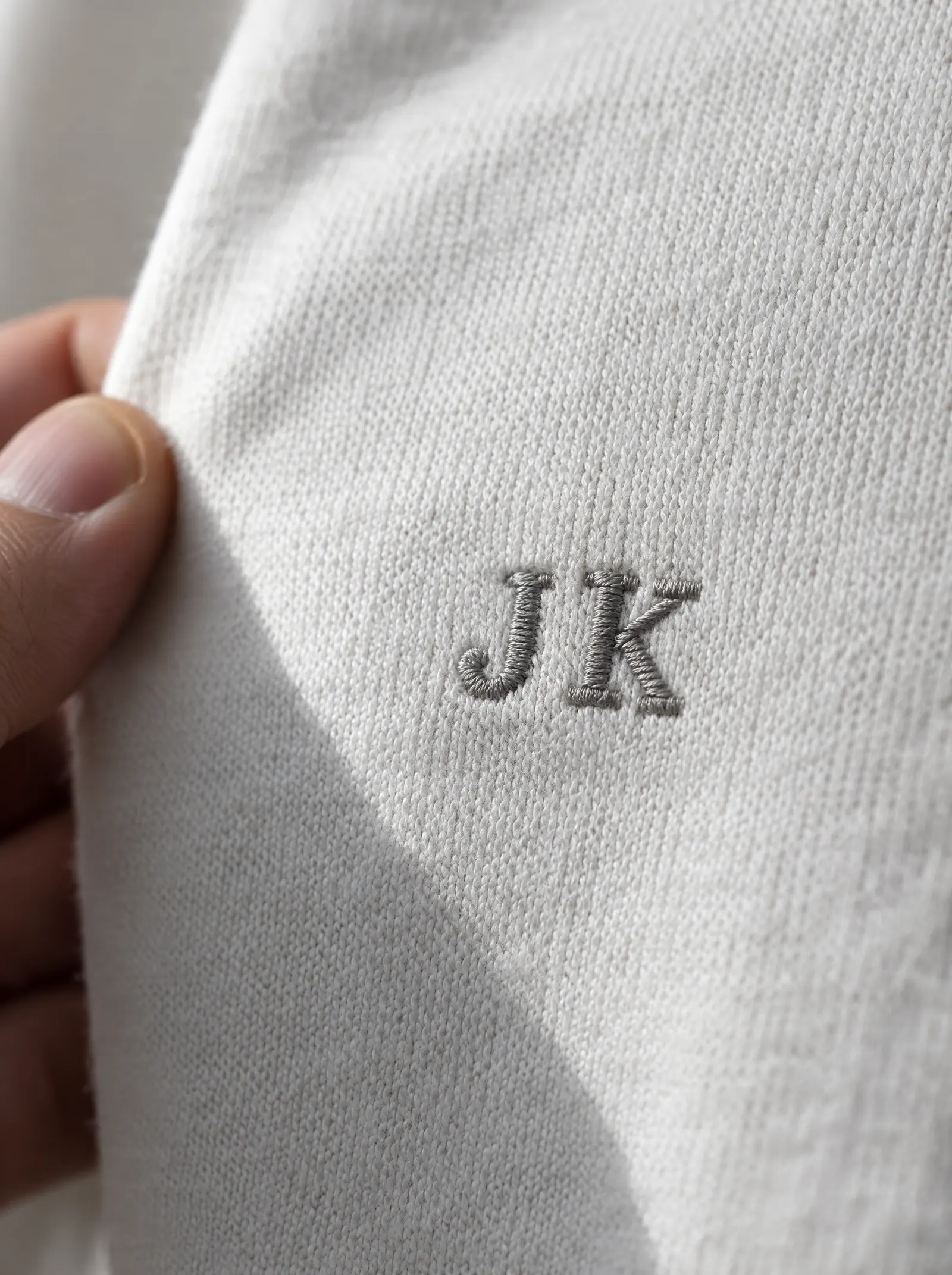
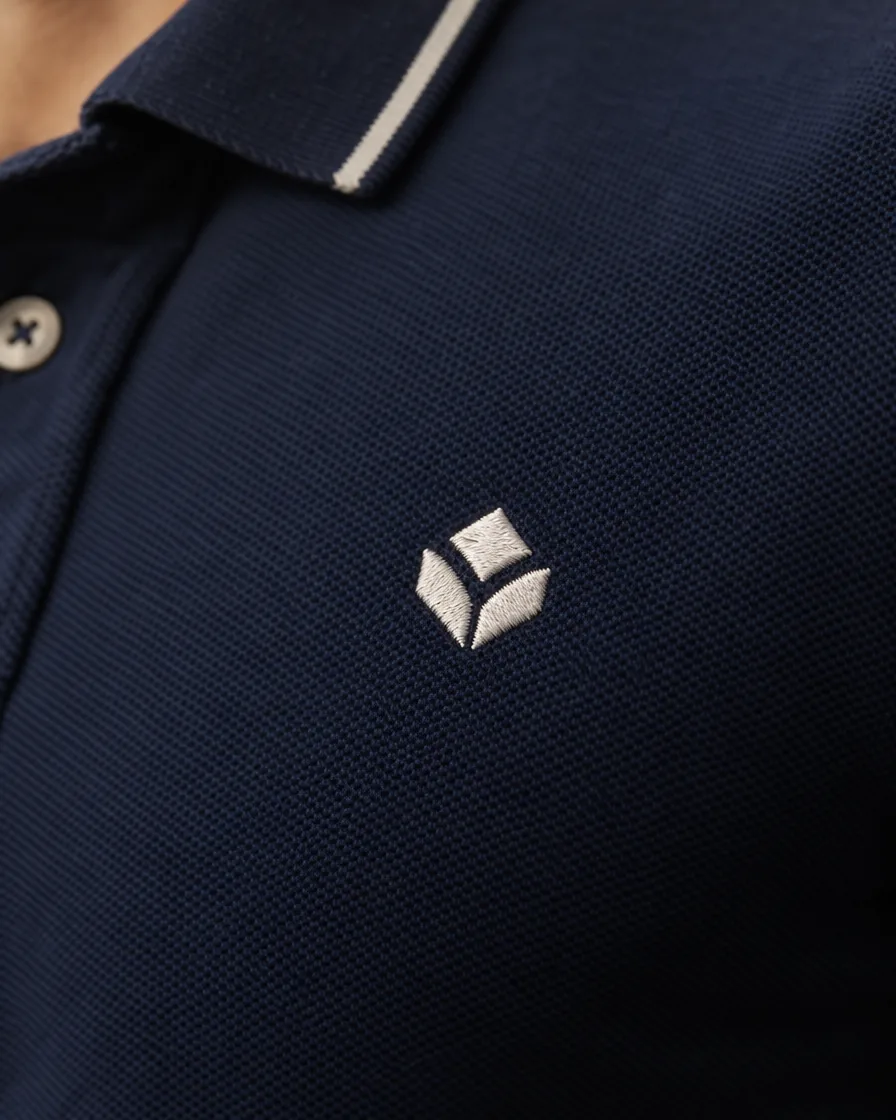
- The texture of thread. Embroidery is drawn flat; real stitches have depth and simplify very fine lines.
If any of these matters to you, order one piece before the full run. One piece is a real order on most of the range, and one printed t-shirt online is from ₹465 + GST.
Are the order details right?
Check the panel around the picture as carefully as the picture. Is the garment the one you chose (a Classic Crewneck and a Signature Crewneck look alike in a picture)? Are the contrast parts, such as a collar or cuffs, in the colour you wanted? Does the size breakdown add up to your total?
Then check the date. Dispatch is from 4 days for a core colour with matching parts in DTF or embroidery, up to 50 pieces; 12 days for contrast trims, an extended colour, screen printing or more pieces; and 30 days for a Pantone colour. The date on the mockup is the one we commit to, counted from your approval, so approving on Friday rather than Monday moves it.
How do I ask for changes?
Send every change in one message, numbered, and say which position each one refers to ("front, 2: make the logo A5"). Ask for a revised mockup and approve that, never "the last one, with the changes". The version you approve should be the version that gets made, with nothing left to memory.
When you are ready to start, design your t-shirt online and see it on the garment before you send it to us.
Quick answers
What is a mockup in t-shirt printing?
A picture of your order before it is made: your design on the chosen garment, in position, at its printed size, in the garment, ink or thread colours that will be used. Nothing is made until you approve it, and the finished order is checked against it.
Are changes to a mockup free?
Yes. Changes before you approve are free. Send every change in one numbered message and approve the revised mockup, not a description of the changes.
What happens if my t-shirts do not match the approved mockup?
We reprint them free. That is why the approved mockup matters: it is the reference every finished piece is checked against, so a mistake you approve is the one that gets made.
Why does my mockup look a different colour from the finished t-shirt?
Screens show colour differently, and fabric takes colour differently from a screen. Judge garment and ink colours by their names on the mockup, and order one piece first if the exact shade on cloth matters.
Should I order a sample as well as approving a mockup?
If the feel, the fabric weight or the exact shade matters, yes. A mockup shows position, size and colour names; one piece shows everything else. One printed t-shirt online is from ₹465 + GST.