
Chef coats are part of our uniform range, and this guide sits with our custom uniforms series. Here is how to make each decision, in the order a head chef usually makes them.
Which fabric suits a hot kitchen?
Chef coats come in two kinds of cloth, and the quote names the one it is based on.
- Cotton breathes, which is what a chef notices most on a busy line. It is comfortable against the skin. It creases more and needs care in washing.
- Poly-cotton drill is the working kitchen's choice when coats go to a laundry every day. It holds its shape, dries fast and takes hot washing without complaint.
Ask yourself one question first: who washes the coats? If it is a commercial laundry, washing hot every day, go poly-cotton. If chefs take their own coats home, cotton is a pleasure to wear.
Double or single breasted?
| Choice | Choose it for | Think about |
|---|---|---|
| Double breasted | Grill, tandoor, fryer and sauté stations; open kitchens | Two layers over the chest; can be re-buttoned to hide a stain; warmer to wear |
| Single breasted | Prep, pastry, cloud kitchens, short shifts | Lighter and quicker on and off; a stain shows until the next wash |
The double breasted coat is the classic for a reason: the overlap is a second layer between a chef and hot splashes, and in an open kitchen a chef can swap the front over before service. If your kitchen is closed and hot, a single breasted coat is the cooler choice.
Full or three-quarter sleeves?
- Full sleeves cover the forearms near open flame and hot oil. They suit grill and tandoor stations.
- Three-quarter sleeves keep cuffs out of food, water and dough. They suit prep, pastry and anyone at a sink.
Many kitchens order both, by station, in the same cloth and colour. That is one specification per sleeve length on the same order.
White or black?
| Colour | Good for | Watch for |
|---|---|---|
| White | Washing hot, bleaching, pastry, classic kitchens | Shows every mark until it is washed |
| Black or dark | Open kitchens between washes, grill stations | Fades under hot washing; shows flour |
White is the traditional colour because it can be washed hot and bleached clean. Dark coats look sharper for longer between washes, but they fade under the same treatment, and a pastry section in black spends the day dusted white. Some kitchens put the head chef in black and the brigade in white; the mark and names keep it one team.
Buttons or press studs?
- Cloth knot buttons are the traditional finish, and they survive industrial laundering.
- Press studs open in one pull, so a coat can come off fast if hot oil or liquid soaks through.
It is the head chef's call, and worth deciding before the mockup, because it changes how the front looks.
How should the embroidery be laid out?
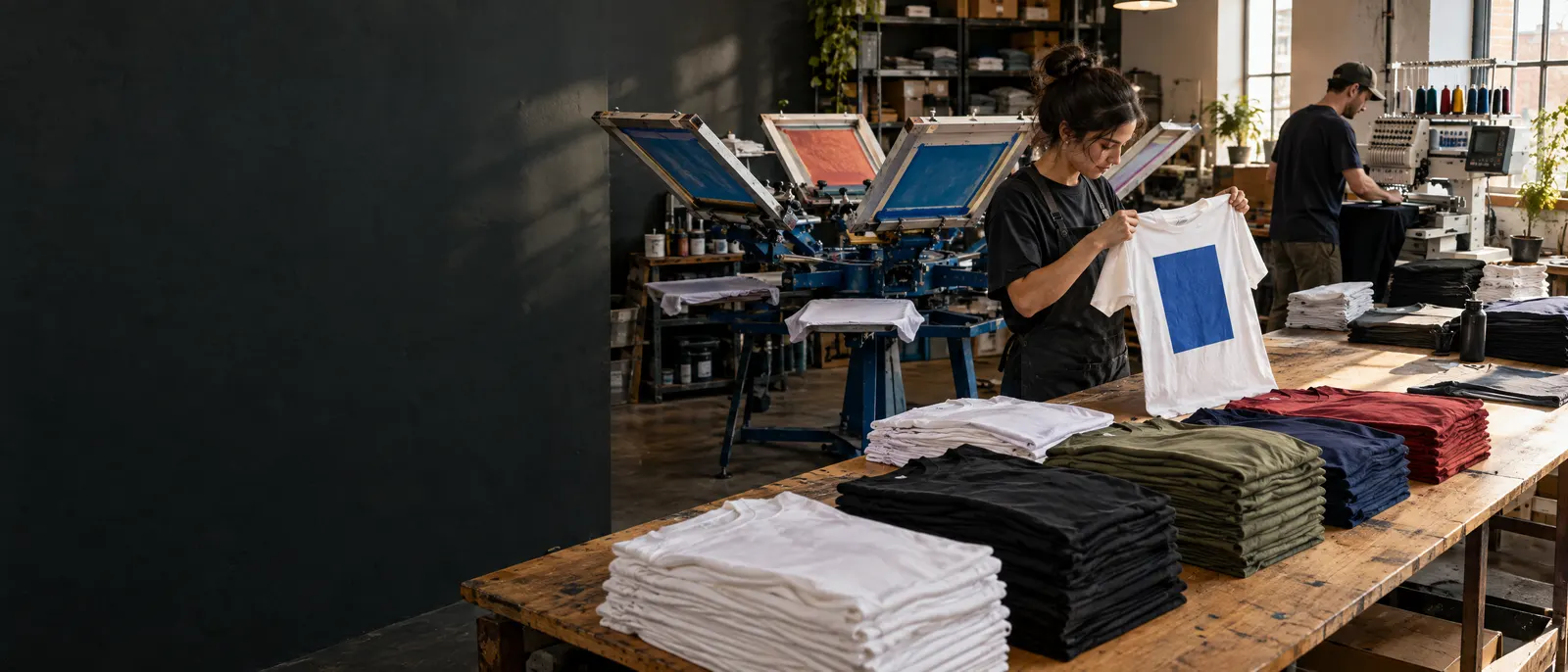
Embroider, do not print. Kitchen coats are washed hot and often, and thread survives that where a print cracks and lifts.
The usual layout:
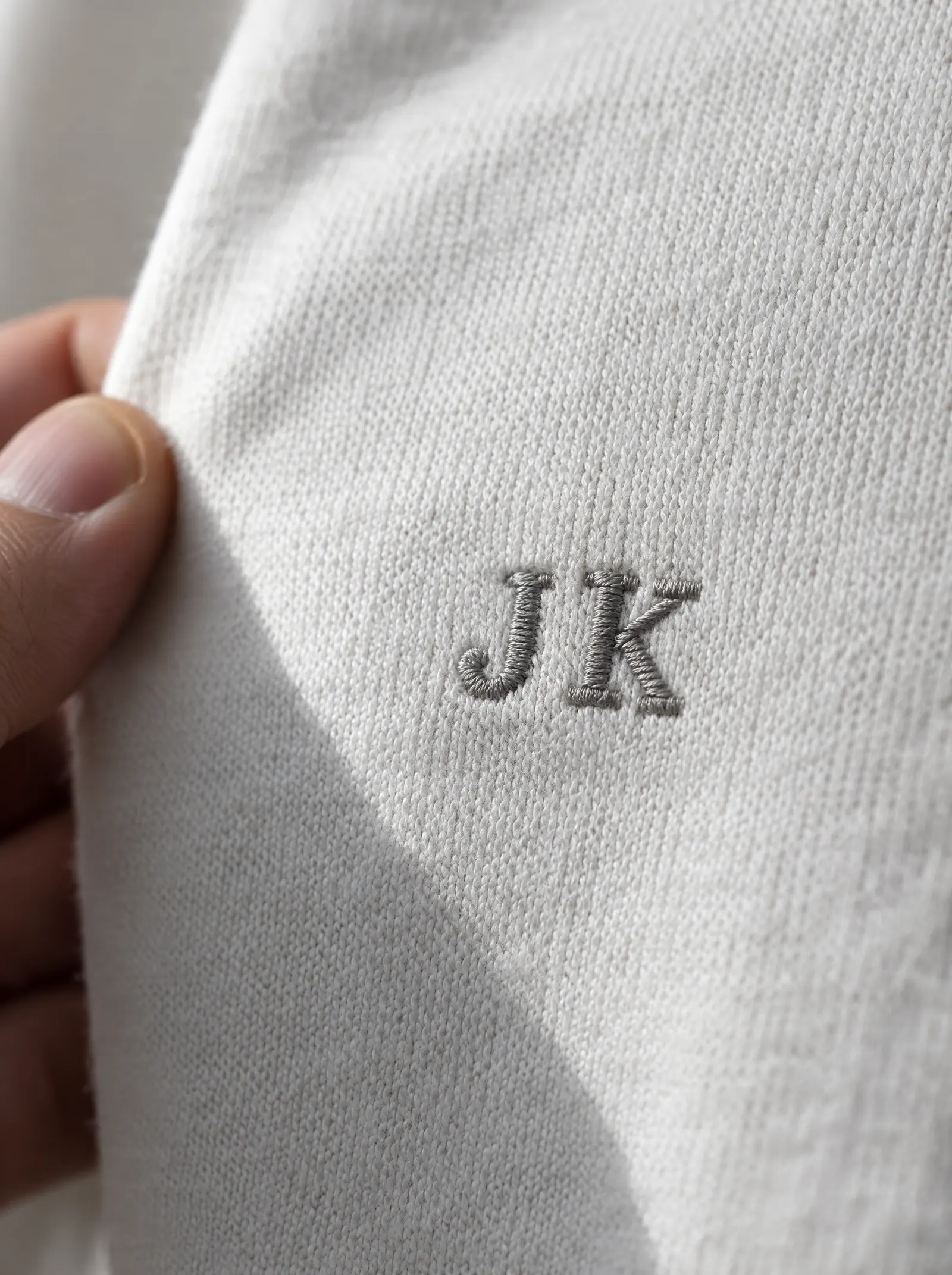
- The restaurant's mark on the left chest, up to 4 inches across.
- The chef's name above or below the mark, in the same thread colour.
- A title, if you use them ("Head Chef", "Pastry"), in smaller lettering under the name.
Choose a thread colour from your brand, and keep it the same across every coat. On a white coat, a dark thread reads best; on black, white or a light brand colour. Keep names to one rule: first name, or first name and initial.
A left chest embroidery is ₹60 a piece at 1 to 9 pieces, falling to ₹50 for larger orders, plus a one-time ₹300 + GST digitising charge per design under 100 pieces. Our guide to embroidery digitising explains what that charge covers.
How many coats does each chef need?
Kitchens wash every day, so most chefs need three or four coats: one on, one or two in the laundry, one spare for a bad spill. Our guide to planning a staff uniform order works through sets per person and spares for new joiners.
Ordering for a whole brigade
1. List the brigade: name, station, size, sleeve length and how many coats each. 2. Pick one cloth, one colour plan and one fastening for each station. 3. Send your mark as a vector file if you have one. 4. Check every name on the mockup.
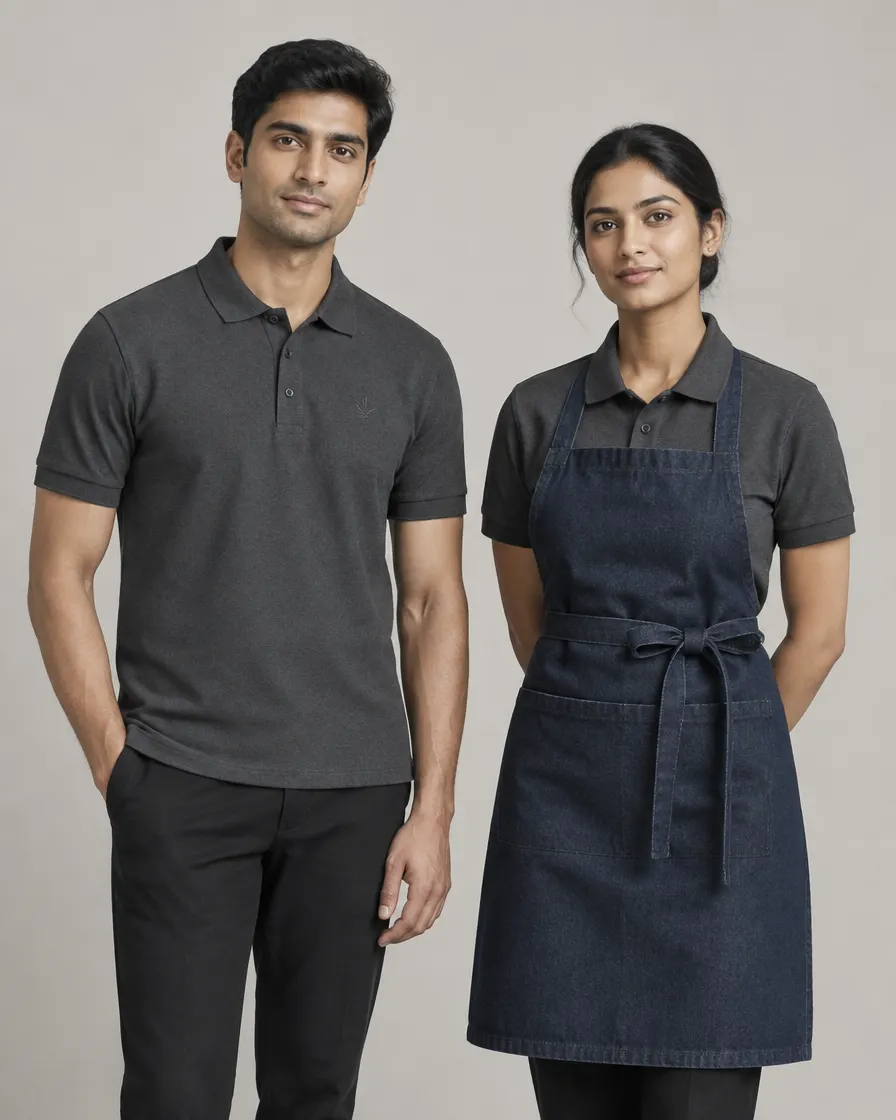
Sizes run XS to 5XL, so the whole brigade, from the commis to the head chef, is on one cut. Aprons and caps can go on the same order and invoice, branded to match. One coat is a real order, so a new commis gets a coat that matches the rest, and our guide to matching uniforms to brand colours covers putting your colour into the kitchen.
When you are ready, see our chef coats with embroidered names and send the brigade list.
Quick answers
What fabric is best for a chef coat?
Poly-cotton drill for kitchens that send coats to a laundry and wash them hot every day: it holds its shape and dries fast. Cotton breathes better and is more comfortable, but creases and needs gentler washing.
Should a chef coat be double or single breasted?
Double breasted for hot stations and open kitchens: it adds a second layer against splashes and can be re-buttoned to hide a stain. Single breasted is lighter and cooler, for prep, pastry and short shifts.
Are black chef coats a good idea?
For open kitchens and grill stations, yes: they hide marks between washes. But they fade under hot washing and show flour, so pastry sections usually stay in white.
Where does the name go on a chef coat?
On the chest, above or below the restaurant's mark, embroidered in the same thread colour. A title, if you use one, goes in smaller lettering under the name. Check every name on the mockup.
How many chef coats does a chef need?
Three or four, because kitchen coats are washed every day: one on, one or two in the laundry, and one spare for a bad spill.