
The collar is where a polo is read first, so it is worth choosing on purpose. This guide sits in our garments and fabric series, which starts with choosing t-shirt fabric.
The five collars at a glance
| Collar | What it is | Minimum | Dispatch |
|---|---|---|---|
| Flat knit | A knitted rib collar in one colour | One piece | From 4 days in the body colour |
| Single tipped | Flat knit with one stripe knitted near the edge | One piece | 12 days |
| Double tipped | Flat knit with two stripes near the edge | One piece | 12 days |
| Jacquard | A pattern or lettering knitted into the collar | 50 pieces | 12 days |
| Self-fabric | Cut and sewn from the same cloth as the body | One piece | 12 days |
Dispatch is counted from approving the mockup, and the date is written on it.
What is a flat knit collar?
The collar most polos have: a separate piece knitted in rib, in one colour, and sewn to the neck. In the body colour, it is the understated choice, and the only collar that keeps a polo in our fastest tier: a core colour with matching parts, embroidered or printed, up to 50 pieces, from 4 days.
A flat knit collar can also be a contrast colour, for example a white collar on a navy body. That counts as a contrast part, so the order moves to 12 days, with no extra minimum.
Choose it for: uniforms that are reordered often, large teams on a deadline, and anyone who wants the logo to do the talking.
What is a tipped collar?
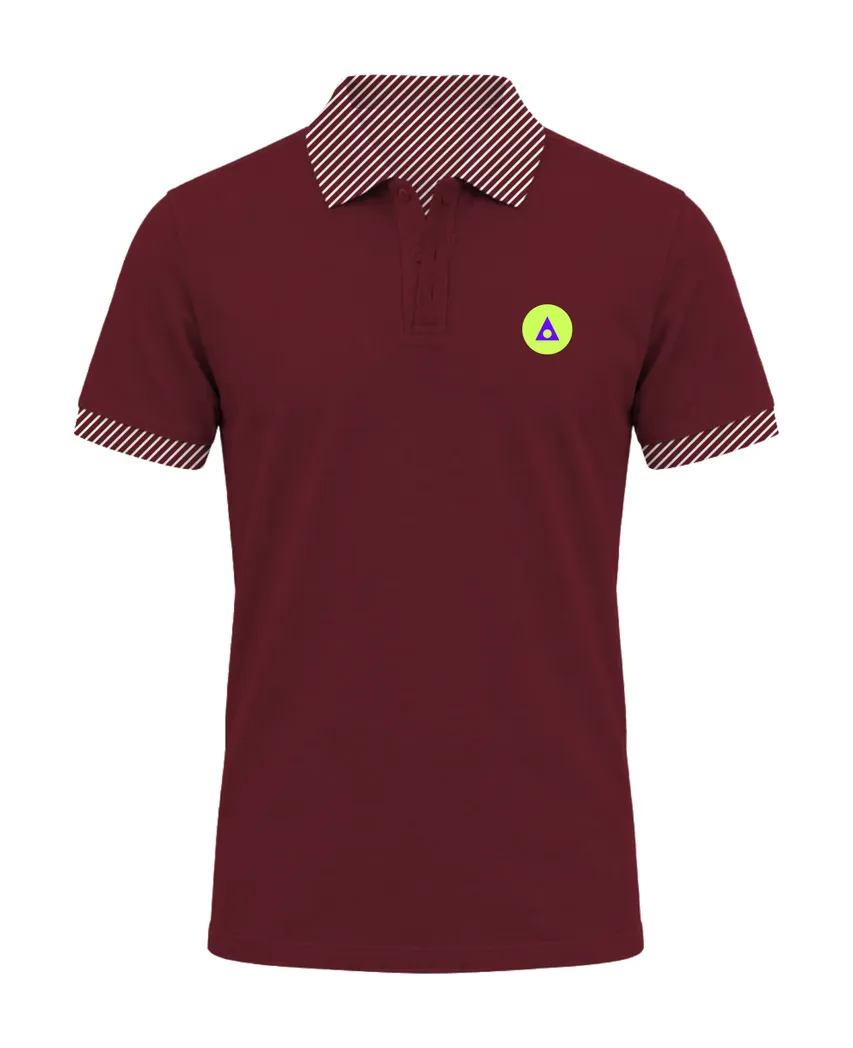
Tipping is a thin stripe of a second colour knitted into the collar near its outer edge, usually repeated on the sleeve cuffs. Because it is knitted in, not sewn on, it cannot peel and it wears at the same rate as the rest of the collar.
- Single tipped has one stripe. It reads as neat and corporate.
- Double tipped has two stripes, which can be one colour or two. It reads as sportier and gives room for a two-colour brand.
Tipped collars are knitted to order rather than taken from stock, which is why they take 12 days. There is no extra minimum, so a team of eight can have them.
A tip on colour: match the tipping to your brand but not to the logo itself. A stripe a step quieter than the embroidery keeps the eye on the logo.
What is a jacquard collar?
Jacquard is a knitting method that builds a pattern into the fabric as it is knitted, so the design is part of the collar rather than printed on it. On a polo collar it can carry a repeating motif, a band of your brand colours, or a word, such as your company name, running around the collar.
It is the most distinctive collar we make and the one people notice up close. Because a jacquard pattern has to be set up on the knitting machine, it starts at 50 pieces and takes 12 days.
Choose it for: hospitality and retail teams who are seen up close, launch kits, and any brand that wants the polo to be recognisable without a large logo.
What is a self-fabric collar?
A self-fabric collar is cut from the same cloth as the body and sewn like a shirt collar, rather than knitted as a separate rib. It matches the body exactly in colour and texture, and it gives the polo a smoother, more tailored look.
It suits a polo that has to sit next to shirts: front office teams, sales staff, anyone who would otherwise wear a formal shirt. It is made to order, so 12 days.
Which collar suits which team?
| Team | Collar we would suggest | Why |
|---|---|---|
| Staff who reorder every month | Flat knit, body colour | Fastest, and the easiest to match |
| Sales and front desk | Single tipped or self-fabric | Looks specified, stays formal |
| Clubs and sports teams | Double tipped in club colours | Two colours, a sporting look |
| Hospitality and retail | Jacquard with your name | Recognisable up close |
| A small team on a deadline | Flat knit | From 4 days, from one piece |
Does the collar change with the fabric?
The same five collars are offered on our Classic Polo (230 GSM cotton), Heavy Polo (270 GSM cotton) and Active Polo (200 GSM polyester). On a heavier body, a tipped or jacquard collar looks richer; on the Active Polo, a double tipped collar suits the sporting cut.
Whatever the collar, the body colour follows the same rules: a core colour from one piece, an extended colour from 75 pieces, your Pantone from 300.
How do I keep a collar looking good?
Wash polos inside out and cool, and dry them flat or on a hanger rather than pegged by the collar. Do not iron over tipping or jacquard on high heat. Press the collar flat while it is slightly damp. These habits matter more for a collar than for any other part of the garment, because it is the first thing anyone sees.
For the rest of the decision (fabric, logo and sizing), read choosing a company polo, and if you are still deciding between garments, polo or t-shirt for your team. To see why a collar is one part of a garment built in your brand, that guide shows the whole set of choices. When you know what you want, order custom polo shirts with your collar and logo.
Quick answers
What is the difference between a flat knit and a tipped polo collar?
A flat knit collar is knitted rib in one colour. A tipped collar is the same collar with one or two thin stripes of a second colour knitted in near the edge, usually repeated on the cuffs. Tipped collars are knitted to order, so they take 12 days.
What is a jacquard collar on a polo?
A collar with a pattern or lettering knitted into it, such as a band of brand colours or a company name. It is part of the knit, not printed. With us it starts at 50 pieces and takes 12 days from mockup approval.
What is a self-fabric collar?
A collar cut and sewn from the same cloth as the body, like a shirt collar, rather than knitted as a separate rib. It matches the body exactly and looks more tailored. It is made to order, so dispatch is 12 days.
Which polo collar is fastest to make?
A flat knit collar in the body colour. With a core colour body, embroidery or DTF, and up to 50 pieces, it dispatches from 4 days. Any contrast or made-to-order collar moves the order to 12 days.
Is there a minimum order for a tipped polo collar?
No. Single and double tipped collars start from one piece. Only the jacquard collar has a minimum, 50 pieces, because the pattern is set up on the knitting machine.