
If you are new to all of this, the place to start is embroidery or print, which covers the five ways a logo goes onto a garment.
Fabric and garment terms
- GSM: grams per square metre, the weight of a fabric. A higher number means a heavier, denser cloth. Our Signature Crewneck is 220 GSM; the Classic Hoodie is 300 GSM. What GSM means.
- Combed cotton: cotton whose short fibres have been combed out before spinning, which makes a smoother, stronger yarn that pills less.
- Single jersey: the plain knit of most t-shirts, smooth on the face and lighter on the back.
- Interlock: a double knit, smooth on both sides and heavier than single jersey. Our Signature Crewneck is interlock. Choosing t-shirt fabric.
- Pique: a textured cotton knit used for polos. It breathes and holds its shape. Airtex is a pique-style knit with a more open, airy texture; our Classic and Heavy Polos are made in it. Choosing a company polo.
- Fleece: a knit brushed on the inside so it is soft and warm, used for hoodies and sweatshirts.
- Loopback or French terry: a knit with flat loops on the inside instead of brushed fleece, lighter and more breathable. Hoodie styles for teams.
- Bio-wash: an enzyme wash that removes loose surface fibres, so the fabric feels softer and pills less.
- Shrinkage arrest: a finishing step that shrinks the cloth before it is cut, so the garment keeps its size after washing.
- Oversized fit: a cut that is deliberately wider and longer than a regular fit, often with a dropped or forward shoulder.
- Crew neck: a round neck finished with a ribbed band. On a sweatshirt it is the main difference from a hoodie. Sweatshirt or hoodie.
- Windcheater: a thin, light shell jacket that blocks wind and light rain. A bomber is a fuller jacket with ribbed collar, cuffs and hem. Choosing a company jacket.
- Chef coat: a kitchen jacket, single or double breasted, also called a chef jacket. Choosing a chef coat.
Polo and garment parts
- Placket: the strip at the front of a polo neck where the buttons sit. The inner placket is the under-strip the buttons are sewn onto.
- Rib: a stretchy knit used for collars, cuffs and waistbands.
- Flat knit collar: a polo collar knitted in rib in one colour, the standard collar.
- Tipping: one or two thin stripes of a second colour knitted into the edge of a polo collar and cuffs.
- Jacquard collar: a collar with a pattern or lettering knitted into it, from 50 pieces with us.
- Self-fabric collar: a collar cut from the same cloth as the body, like a shirt collar. Polo collar styles.
- Blank: a stock garment in a stock colour that a logo is added to. A brand-built garment is made with your choice of fabric, part colours and collar. Logo on a blank or a brand-built garment.
Printing and embroidery terms
- DTF (direct to film): a full-colour design printed onto film with adhesive, then heat pressed onto the garment. Works on any fabric. Screen printing or DTF.
- DTG (direct to garment): ink printed straight into cotton, like an inkjet, with almost no feel. Screen printing or DTG.
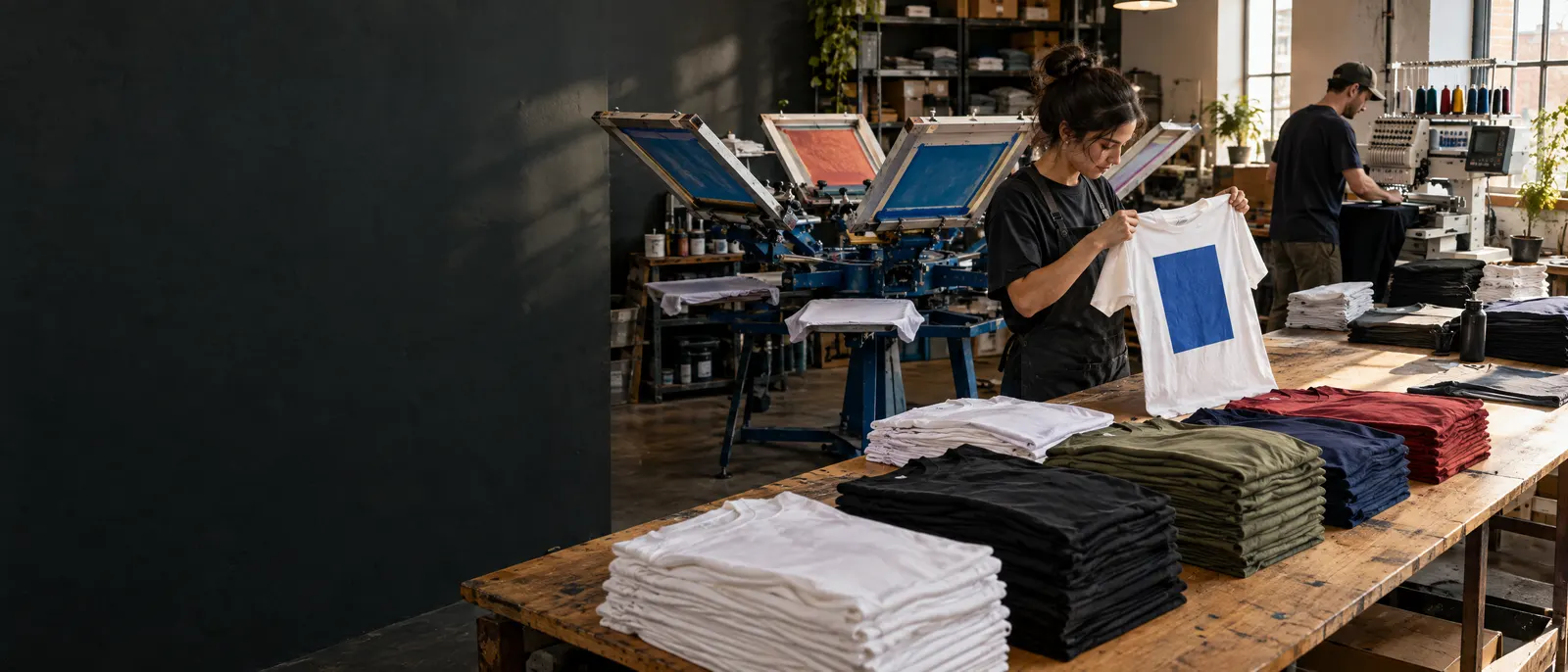
- Screen printing: ink pushed through a mesh screen, one screen per colour. Cheapest per piece on long runs of simple artwork.
- Sublimation: dye turned into a gas by heat so it enters polyester fibres. It cannot crack or peel. What sublimation printing is.
- Sticker print: an Indian shop name for a heat transfer, such as cut vinyl or DTF. Rubber print usually means a thick, opaque screen print. T-shirt sticker printing.
- Heat press: the machine that applies heat and pressure to bond a transfer to fabric.
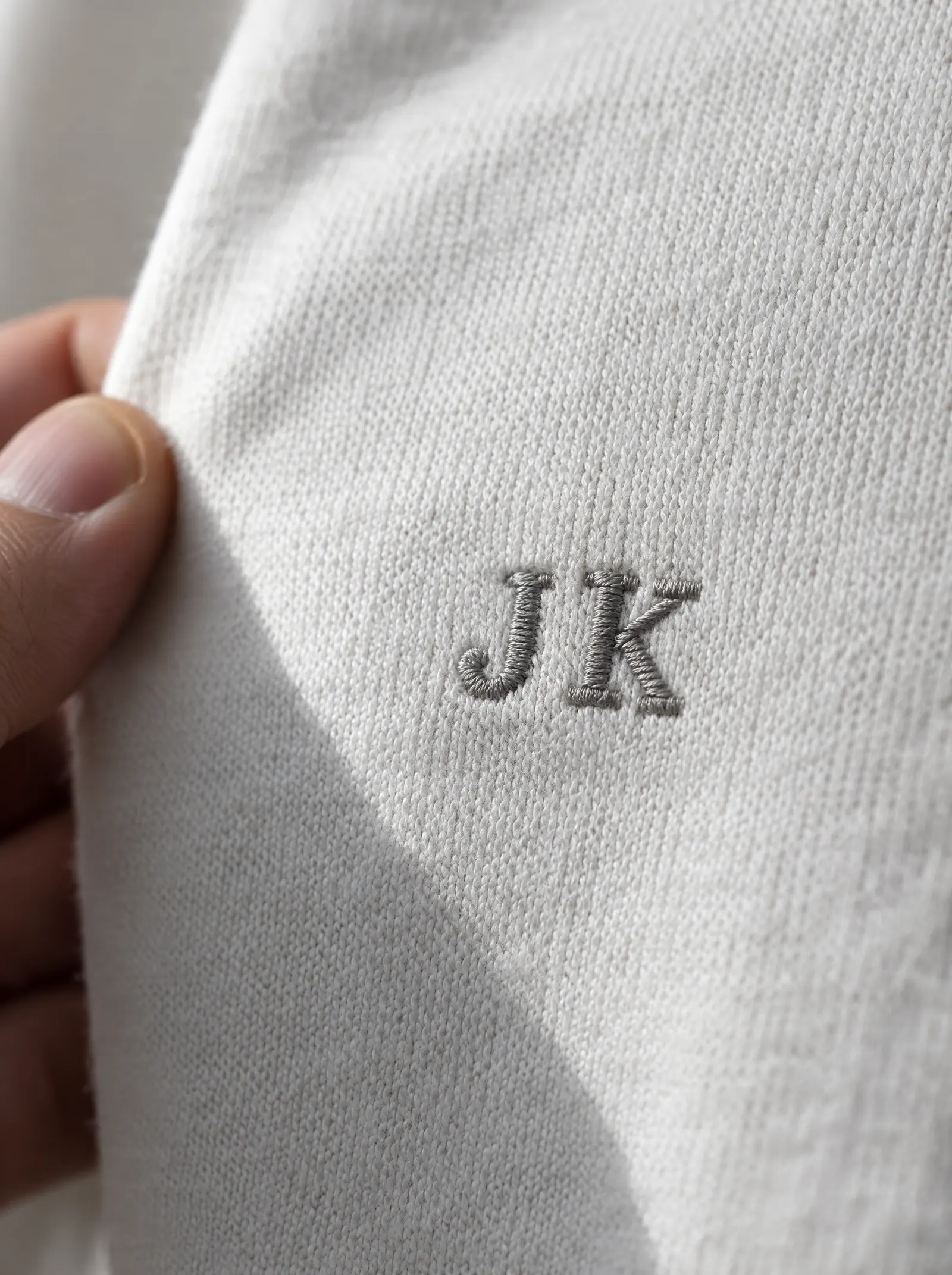
- Embroidery: a design stitched in thread. The most durable way to put a logo on a garment.
- Digitising: turning a logo into a stitch file an embroidery machine can follow. With us it is ₹300 once per design on orders under 100 pieces, and free from 100. Embroidery digitising explained.
- Print sizes A6 to A3: the paper sizes a print is priced by, from A6 (10.5 by 14.8 cm) to A3 (29.7 by 42 cm). At 1 to 9 pieces a DTF print is ₹50 at A6 and ₹265 at A3.
- Left chest: the usual place for a small logo on a tee, polo or jacket. Logo placement on t-shirts.
- Vector file: artwork made of shapes rather than pixels (AI, EPS, SVG or a vector PDF), which scales to any size. Preparing your logo.
Colour terms
- Core colour: one of 15 colours kept in cloth, available from one piece.
- Extended colour: one of 12 further colours, dyed to order from 75 pieces. Why colour minimums differ.
- Pantone: a numbered colour reference system. With us, a body dyed to your Pantone starts at 300 pieces and takes 30 days.
- Lab dip: a small swatch dyed to test a colour recipe against a reference before the full batch is dyed.
- Dye lot: one batch of dyed cloth. Two lots of the same colour can differ slightly. How fabric is dyed to a Pantone.
- Contrast parts: collars, cuffs, plackets, sleeves, hoods or pockets in a colour different from the body. Matching uniforms to brand colours.
Ordering terms
- Mockup: a picture of your order before it is made, showing the design on the garment in position, at size, in its colours. Nothing is made until you approve it. How to check a mockup.
- Minimum order (MOQ): the fewest pieces an option can be made in. One piece on most of our range.
- Dispatch tier: how long an order takes from mockup approval: from 4 days, 12 days or 30 days, depending on colour, parts, method and quantity.
- Saved specification: the garment, colour, artwork and placement kept after an order, so reorders match. Planning a staff uniform order.
- GST invoice: the tax invoice issued with every order, which lets a registered business claim input credit.
Ready to put the words to use? Start with custom t-shirt printing and send us your logo.
Quick answers
What does GSM mean in t-shirts?
Grams per square metre, the weight of the fabric. A higher GSM is a heavier, denser cloth. It describes weight, not quality on its own, so it is read together with the fabric and the knit.
What is pique fabric?
A textured cotton knit used for polo shirts. It breathes, holds its shape and has a slightly raised surface. Airtex is a pique-style knit with a more open texture.
What is tipping on a polo?
One or two thin stripes of a second colour knitted into the edge of a polo collar and usually the cuffs. Because it is knitted in, it cannot peel.
What is the difference between DTF and DTG?
DTF prints a design onto film and heat presses it onto the garment, so it works on any fabric and leaves a thin film. DTG prints ink straight into cotton, with almost no feel, and suits cotton best.
What is a lab dip?
A small swatch of fabric dyed to test a colour recipe against a reference, such as a Pantone, before the full batch of cloth is dyed.